The 4Cs, Explained
Cut, color, clarity and carat weight give you a shared language for understanding a diamond. Read them together, then look at how the stone catches the light.
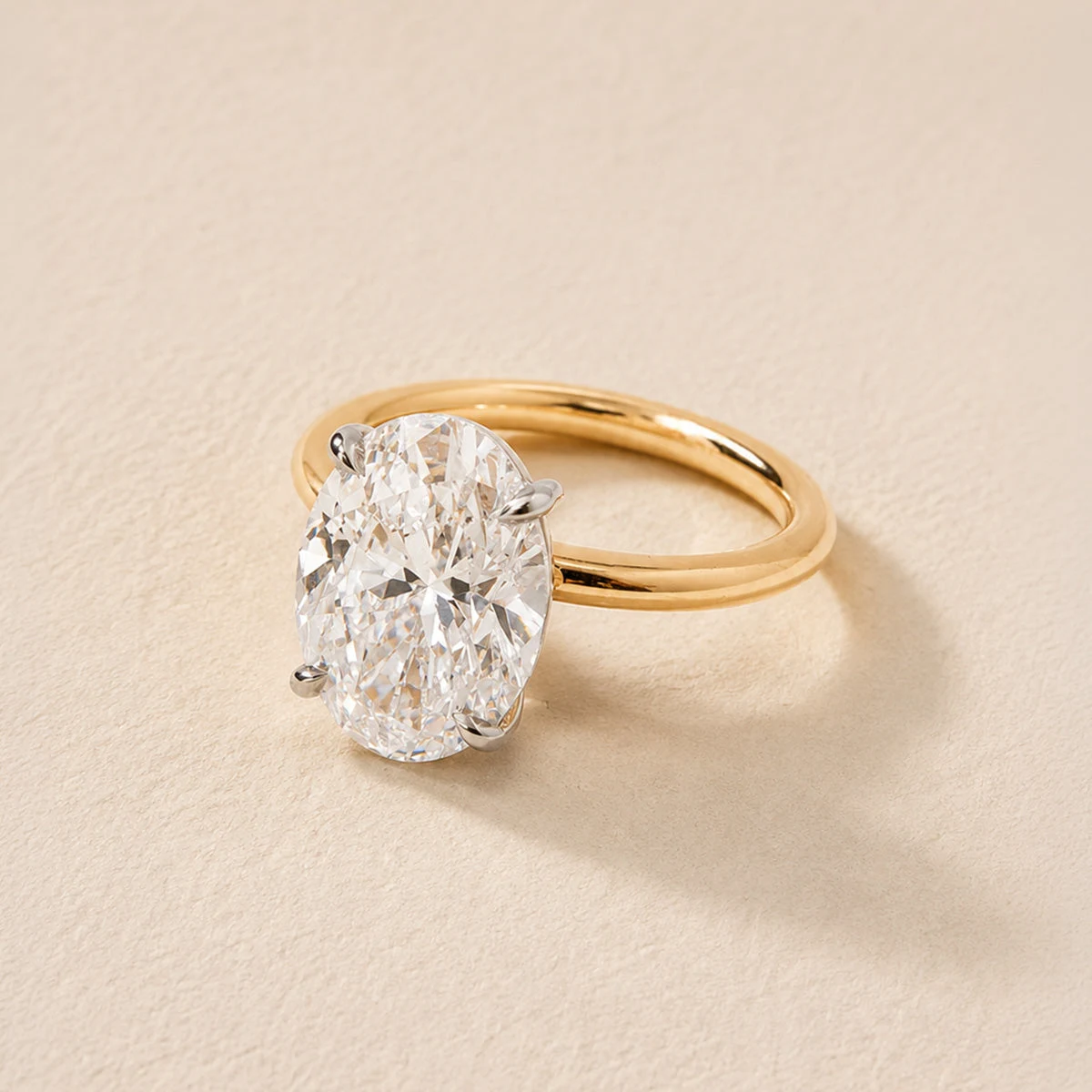
Cut · The play of light
Cut describes how a diamond’s proportions and facets interact with light. It influences brightness, colorful flashes and sparkle. Shape describes the outline, such as round or oval; it is different from cut quality. GIA’s standard cut grade applies to round brilliant diamonds in the D-to-Z color range.
Color · Subtle differences
For diamonds in the D-to-Z range, color grading considers the absence of color. D is colorless; grades farther along the scale show increasing yellow or brown tint. Fancy-color diamonds are assessed differently.
Clarity · A closer view
Clarity considers internal inclusions and surface blemishes. Their size, position, number and other characteristics matter. A clarity grade describes what a trained grader sees under magnification, so compare the report with the stone’s appearance.
Carat · A measure of weight
One metric carat is 0.2 grams. Carat describes weight, not visible size: diamonds of equal weight can have different dimensions and proportions. In jewelry, total carat weight combines the weight of all diamonds in the piece.
Compare the whole picture: the diamond’s report, dimensions and appearance, alongside the setting you love.
Further reading
Explore the educational sources behind this guide.